This section is a complete history of two-tube color cameras
...A timeline of all two-tube color cameras made...
Two-tube cameras are one of the strangest categories of cameras, for many reasons...
Number 1: They are a very undocumented and overlooked part of video history, and a very short lived part, also.
Number 2: Not many models were made, and very few were bought originally.
Number 3: Almost all two-tube cameras use methods for producing color, that are all a little different from each other. This makes every model unique electronically, which is very rare.
To be more specific about the time period they were made, 99.% were only produced from 1973 - 1979, which is only six years!
And because there is not much information on the internet about two-tube color cameras,
I present......
This list will be ordered by date, from oldest to newest
1974:
JVC GC-4800
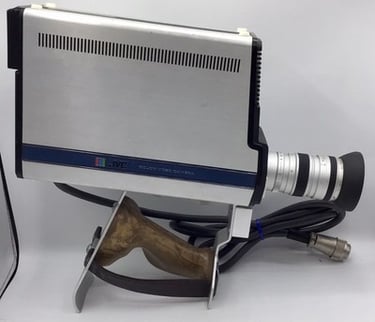
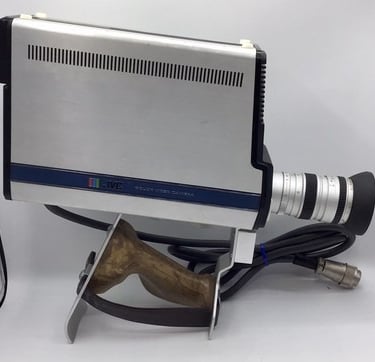
A portable, two-tube color camera. I believe The GC-4800 may be the first ever color, video camera available to consumers. One tube is mounted vertically and one tube is mounted horizontally. The tube in the horizontal position is the color dissector tube, and captures the red, blue, and green channels. The tube in the vertical position is the luminance, or black and white tube. The electronics in the camera head create the R+G+B+Y video signal, and the CCU contains the sync encoder. The camera head weighs 8 pounds.
The CCU has a color temp switch, but no manual color controls. The CCU weighs 2 pounds.
The mating VTR for the camera is the JVC PV-4800, color EIAJ portable VTR. The camera plugs into the CCU, which plugs into the VTR. The original price of the whole system, including the VTR, camera, CCU, power supplies, carrying cases etc., was $6,950.
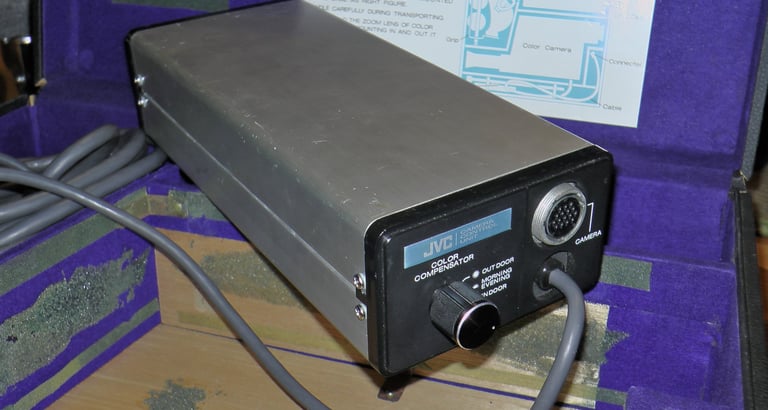
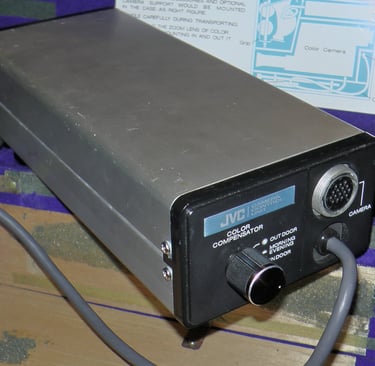
camera head
CCU
1971:
Sony DXC-5000
The DXC-5000 is a (color) studio camera, looking very similar to the DXC-1200/1000, but using two tubes. The color dissector is a Vidicon/Trinicon(?), and the luminance tube is a Plumbicon(?). All Sony color cameras except for this model, used Trinicon tubes, Sony's patented version of the vidicon. Also, this is the only two-tube color camera that Sony manufactured. This makes it an extremely unique camera.
Unlike the DXC-1200/1000, the DXC-5000 requires a separate CCU, which is a little bigger than the camera. The CCU has controls for white balance and gain.
On the back of the camera, there are viewfinder controls for H & V centering, electronic focus, and an intercom jack. Below the controls is the zoom rod. The lens of the camera is not removable.
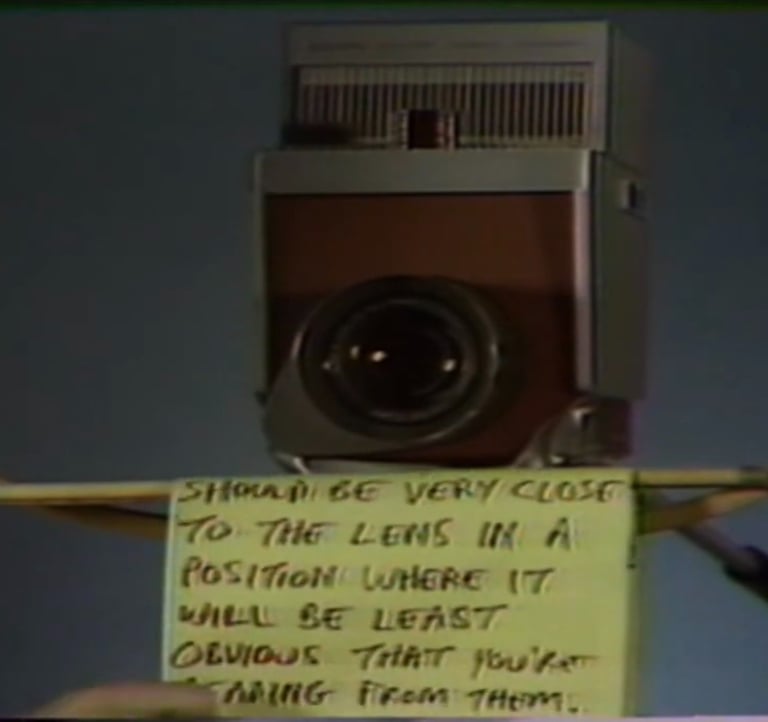
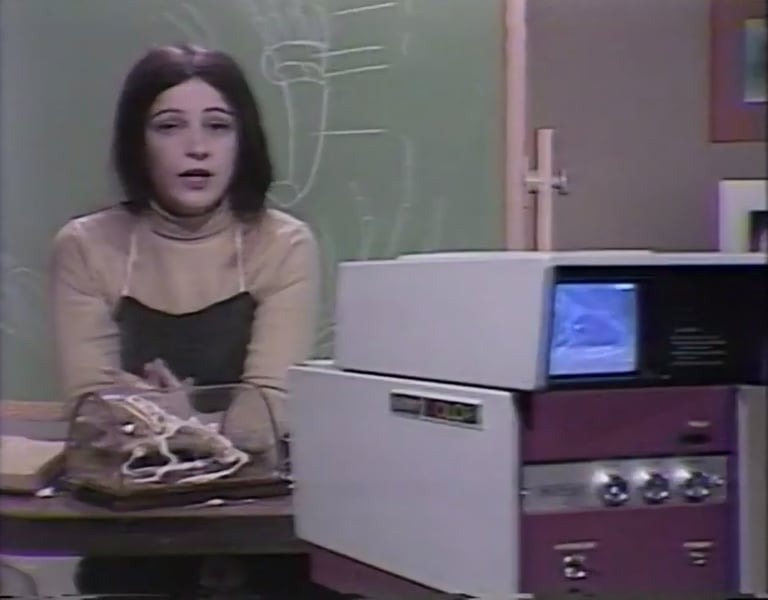
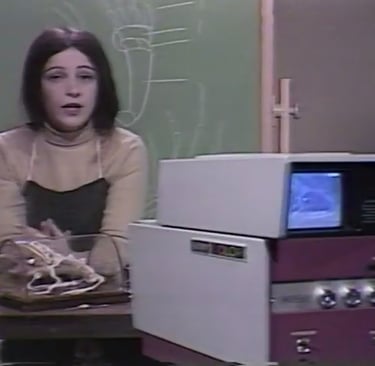
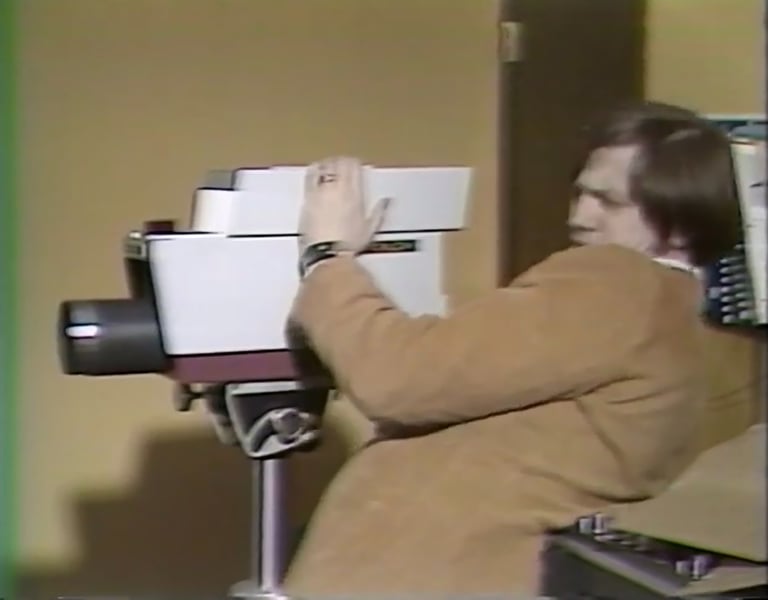
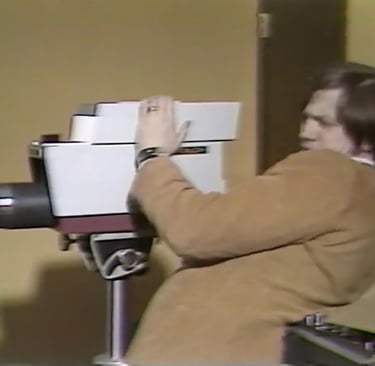
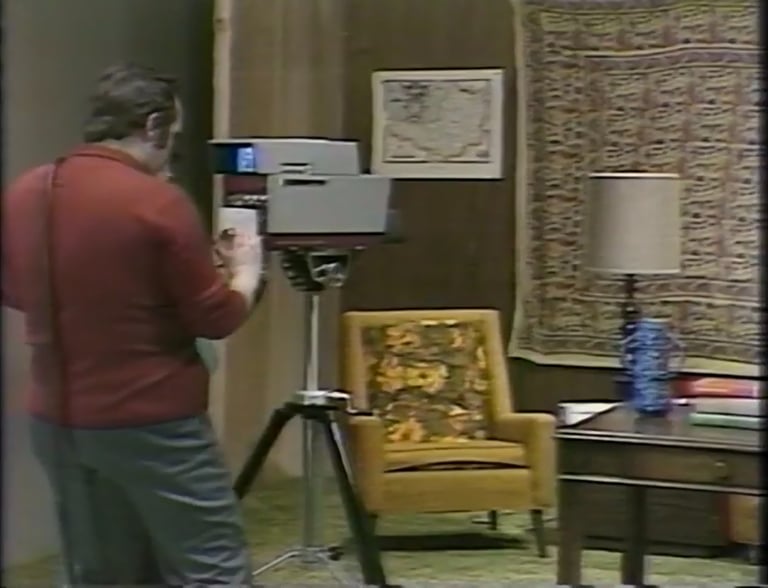
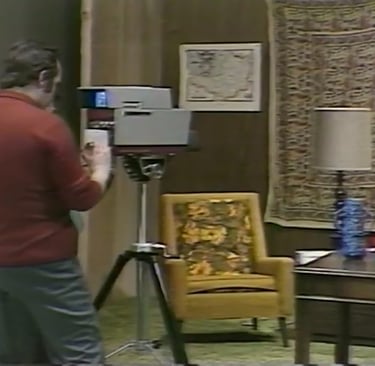
The Sony DXC-5000 in operation...
CCU
1973:
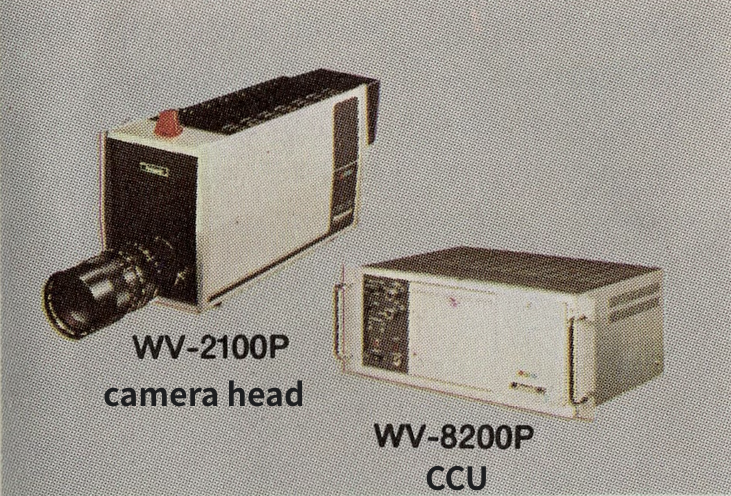
Panasonic WV-2100P
The WV-2100P, was a studio camera, designed for industrial/educational use. The system consists of the WV-2100P color camera head, and the WV-8200P CCU. The camera head weighs 22 pounds with lens, and the CCU weighs 30 pounds.
The camera features a 4.5 inch CRT viewfinder, and can produce 500 lines of resolution at the center of the picture. There were many different options for zoom lenses: A zoom rod lens, cable controlled lens, motorized lens, or a manual zoom lens. The CCU has white balance, pedestal and gain controls, and trim pots for aligning the tubes. In this camera, both tubes are mounted horizontally, stacked on top of each other. Tubes are 2/3 inch vidicons.
1973:
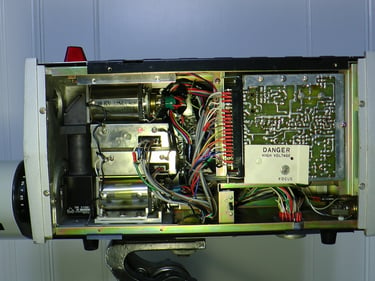
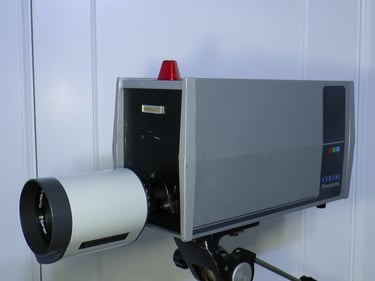
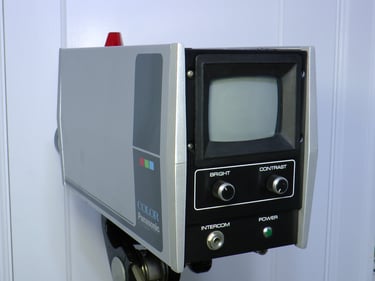
Panasonic WV-2300
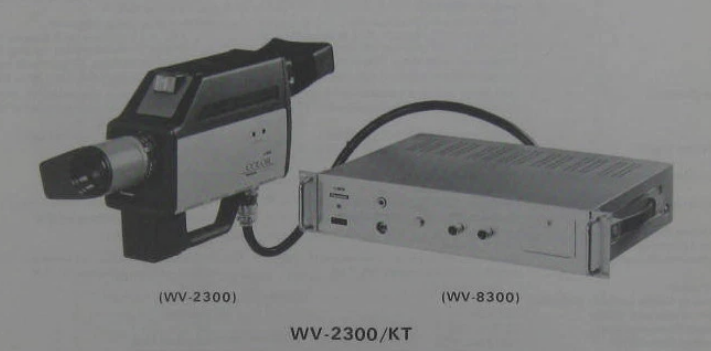
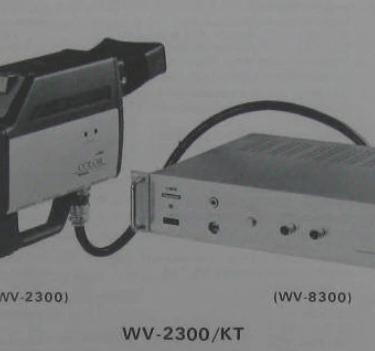
The WV-2300 was the portable version of the WV-2100. The CCU, is about half the size as the CCU for the 2100. The system is also adaptable for studio use, as the CCU can be rack mounted, and the camera lens can be replaced with a cable controlled lens, or a zoom rod lens.
The camera head has an auto white balance button, and two trim pots on the side for aligning the tubes. The rest of the camera controls are on the CCU. In the camera, one tube is mounted in normal horizontal position, and is the chroma tube. The other is mounted vertically and is inside the small box at the front of the hand grip, this is the green/luminance tube. The original price of the camera was $3,800.
A variation of this camera was made, the WV-2800, which was the same camera with no viewfinder for use in film chains.
1974:
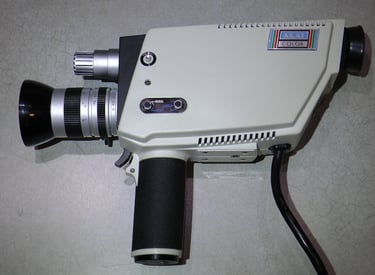
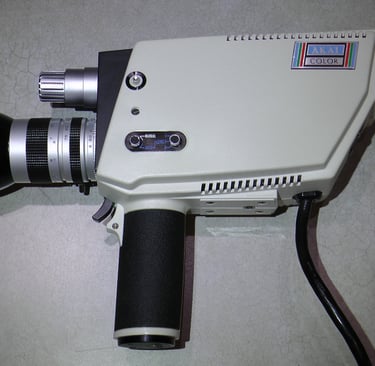
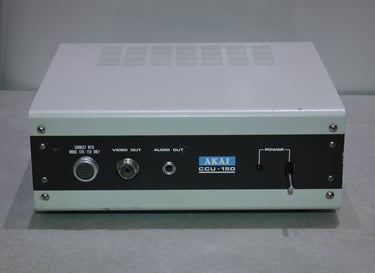
Akai VC-150
The Akai VC-150 was a portable color camera, designed for industrial/broadcast use, and was one of the lightest and smallest systems of the time. It has a 6X zoom lens, auto white balance and auto iris.
The CCU has no camera controls, tube alignment controls are below the viewfinder. In the camera, one tube is mounted horizontally, and is the chroma tube, and one tube is mounted vertically, inside the hand grip, and is the luminance/green tube.
The VTR for the camera, was the VT-150, and recorded to 1/4 tape. When used with the the VTR, the camera needed no CCU, because the pre-video from the camera head was what got recorded to tape. Because of the system's light weight and small size, it was nicknamed "The Hustler".
1974:
Panasonic WV-2200
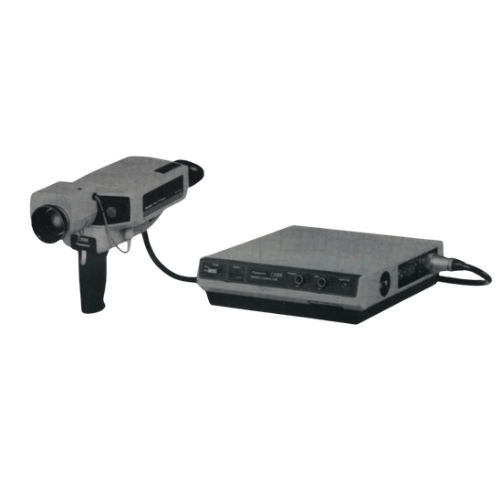
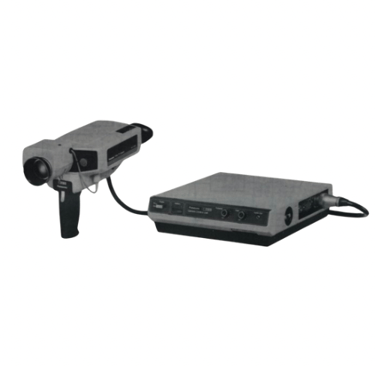
The WV-2200, was a portable industrial color camera. The camera has a 6X zoom lens with automatic iris, and weighs 7 pounds. One tube is mounted horizontally, and one is mounted vertically, inside the hand grip. The tube in the hand grip is the green/luminance tube, and the horizontal tube is the chroma tube.
The CCU has pedestal and gain controls, and is required when operating the camera by battery with it's VTR, the NV-3085.
The NV-3085 is a 1/2 inch EIAJ VTR. The VTR records in color, but needs a separate adapter to playback in color.
1977:
Panasonic WV-2150
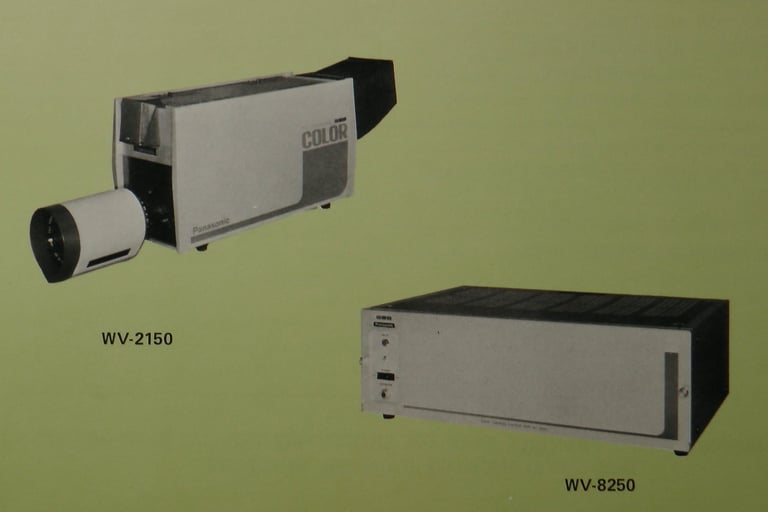
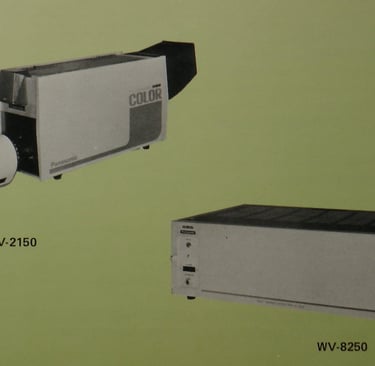
The WV-2150, was the updated version of the WV-2100. It was a big improvement, as it used Newvicon tubes rather than vidicon tubes, like the WV-2100. Newvicon tubes are the highest sensitivity of all tubes, and have very low lag and no burn-in. This was one of the first cameras to use Newvicon tubes.
The system also had several new features including: Gain switch, auto iris, line input, and color bars. The camera weight was also reduced to 17 pounds, and the CCU to 25 pounds.
The CCU offered much more advanced camera controls, and was also improved by having a flip-out front cover, and BNC jacks instead of VHF jacks. Auto iris and auto white balance can be controlled on the camera, or the CCU. The CCU also has automatic gain, and an aperture control which adjusts picture sharpness. And of course, tube registration and color controls are provided.
1977:
JVC GC-3300
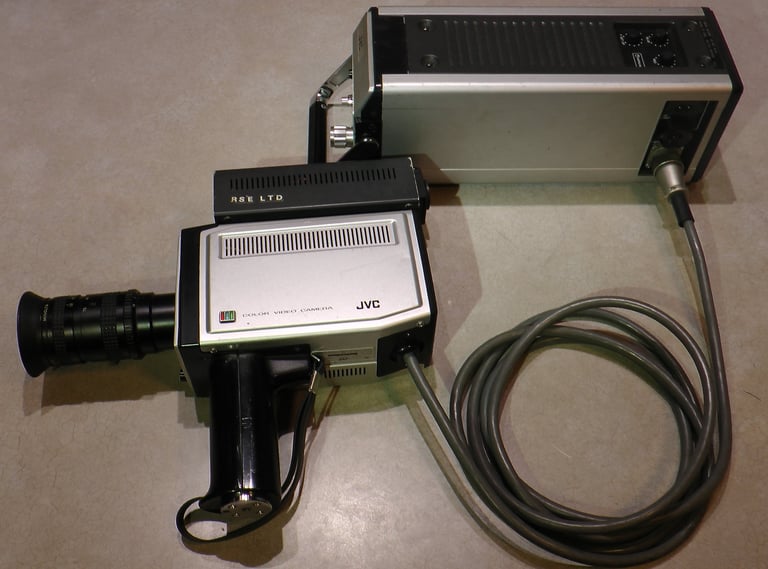
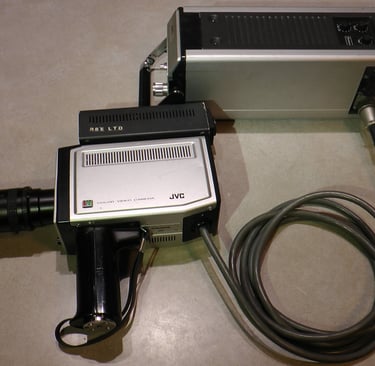
The GC-3300, was a handheld color camera, intended for consumer use. It was designed to be used with the HR-3300, the first VHS video recorder. It could also be used with the HR-4100 for portable recording.
The camera has a detachable viewfinder and a non-removable hand grip. Camera controls are on the CCU, and include a 4-position color temperature switch, manual color controls, and a pedestal control.
1978:
JVC GC-4400
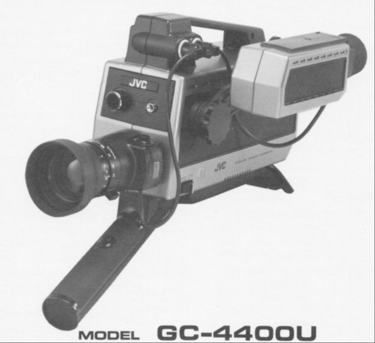
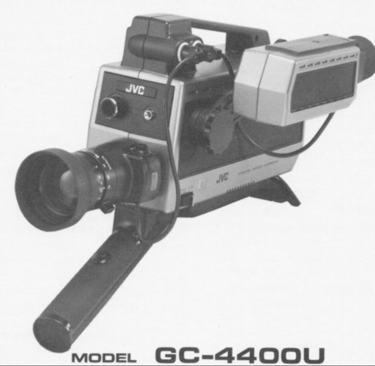
The GC-4400 was the last two-tube camera made. It is also the only two tube camera that was completely self-contained, needing no CCU. It was designed to be used with the CR-4400 portable U-matic VCR, for industrial use.
One tube is mounted horizontally, and the other tube extends vertically into the small bump at the top, where the lens and viewfinder plug in.
It has a removable viewfinder and removable hand grip, for use on a tripod. The lens has a manual and auto iris option. On the back, there is a color temperature switch, manual color controls, and a sensitivity switch. The camera connector is a 12 pin EIAJ connector.