1962 Blonder-Tongue TTVC-1B industrial B&W vidicon camera
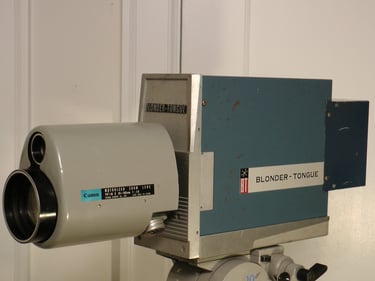
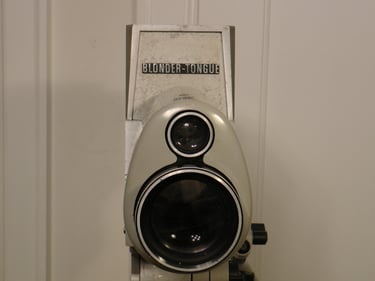
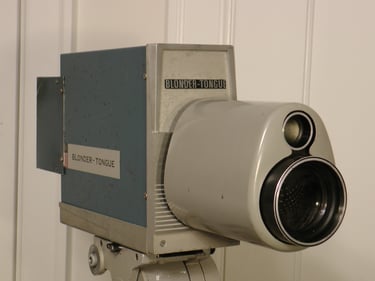
This is an early industrial CCTV vidicon camera. It was made in 1962 and is fully transistorized. It appears as a studio type camera, but it was designed for surveillance use, and there is no built-in electronic viewfinder. It's very heavy and all metal, over 20 pounds. There is zero information about this camera anywhere on the internet. I have yet to find the service/user manual, or any kind of info for this camera, so I can't say anything that specific about it.
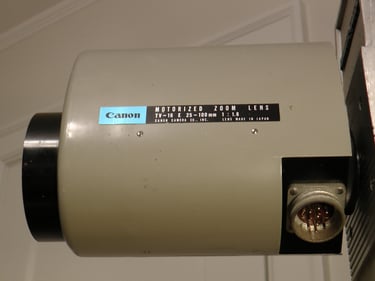
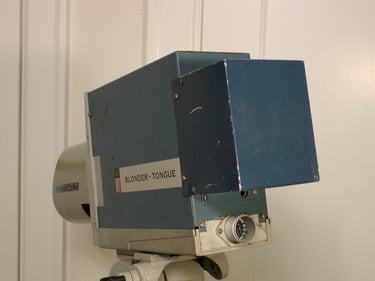
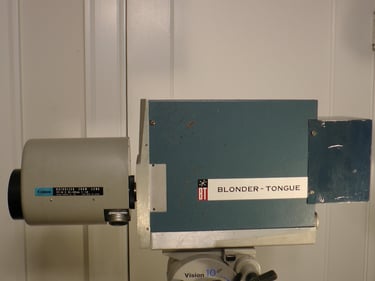
It uses a 1 inch vidicon, and seen here, it has a motorized zoom lens, which is not original. The camera originally had a lens turret which mounted in the small rectangle cut in the blue side panel in the front of the camera, seen in photo 1. The lens was controlled, and sourced power through the connector at the bottom. The camera was owned by "West Michigan Sound company", and has been heavily modified, which you are about to see.
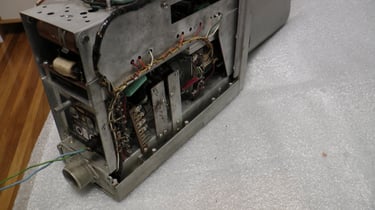
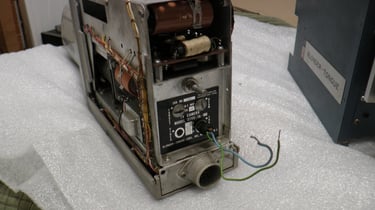
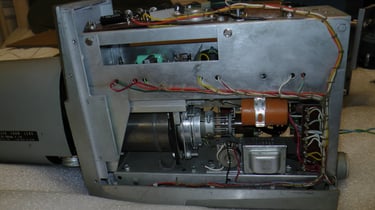
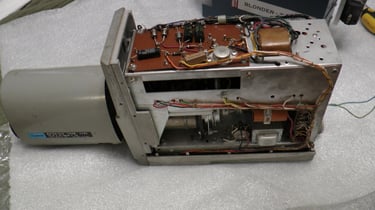
A look on the inside...
You may have noticed the little box mounted to the back of the camera, and this is not original, it's a modification. The modification the box covers up, is a motorized focus assembly. Originally, the camera had a knob on the back, for mechanical focus, which moves the whole yoke assembly closer or farther away from the lens, to focus. Someone pulled the plastic knob off, and installed a small motor, and a large gear which is mounted to the focus knob. Somehow they sourced power from the camera to run the motor(see the two wires coming out the back). Also, notice the large multi-pin connector at the bottom on the back. This is not original either! There was originally a regular power cord that came out the back, that you could plug into a wall outlet. But, they removed that, and replaced it with a large multi-pin connector. This will make powering the unit up a lot harder. Also on the back, there used to be a power switch and BNC video out, but those have been ripped out too. I'm assuming that they re-wired the video out to one of the pins in the multi-pin connector. I also presume that the focus motor was controlled through one of the pins on the connector.
Next, you can see that there were four trim pots on the back, that have all been ripped out. The two on the top were stuffed with screws. One on the bottom, one has been left empty, and the other was used to put the wires for the focus motor through. I happen to have the female end of the connector that was added to the camera, brand new! So I can make a new cable for this camera, when it's time to power it up.